
Intro.
MY RECOMMENDATIONS
After more than 3 years involved into the fluid field research I built up some knowledge that would allow me to guide the people that want to introduce themselves into the field of the Computational Fluid Dynamics. I would try to divide the literature by topic mentioning the most relevant one that I know.
MAIN TOPICS:
- Fluid Mechanics
- Aerodynamics
- Heat Transfer
- Boundary Layers
- Propulsion
- Computational Fluid Dynamics
- Turbulence Modelling
- Acoustics
- Other
The Books.
By Topic:
FLUID MECHANICS:
- Frank M. White, Fluid Mechanics, McGraw-Hill Education, 8th Edition
I still remember how this book made me pass my Fluid Mechanics subject during my 2nd year in the Aerospace Vehicle Engineering Degree. It was the first techical book that I had ever borrowed from the library and the experience was completely amazing. The contents are delivered in an ordered way and it can be understood with an intermediate mathematical and phisics knowledge.

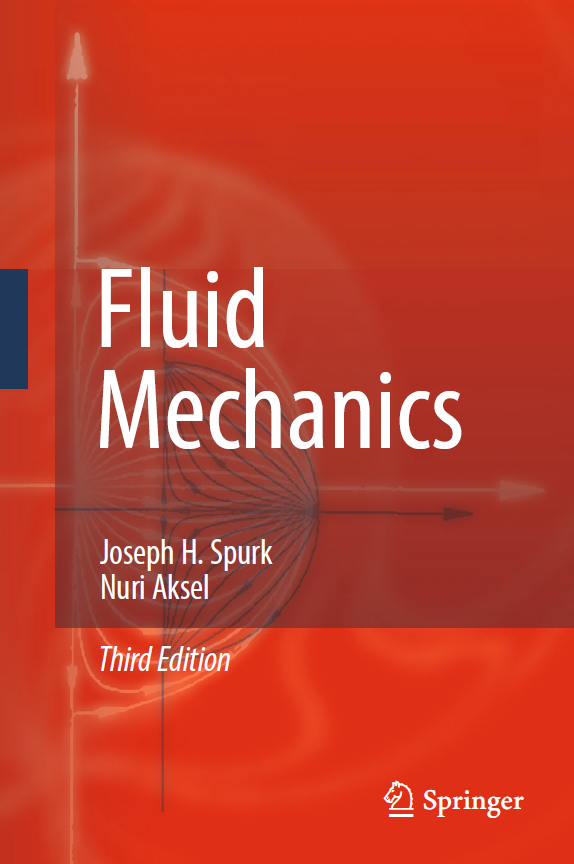
- Joseph H. Spurk, Nuri Aksel, Fluid Mechanics, Springer, 3rd Edition
I personally own a copy of this book and it is very usefull for recalling basic topics that are fundamental for the understanding of more complex cases. It is not a bad book but it should be mentioned that the one written by Frank M. White is magnificent and thus, more recomendable. The reason I have this book and not the afforementioned is that it was more affordable.
AERODYNAMICS:
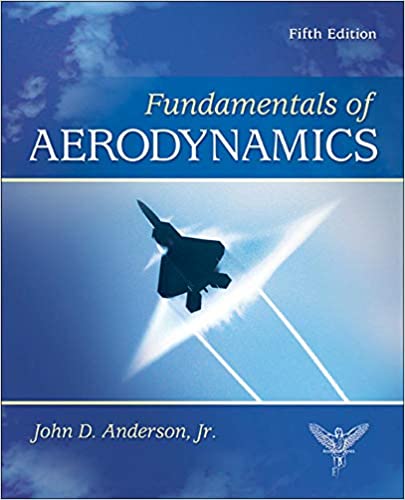
- Jhon D. Anderson, Jr., Fundamentals of Aerodynamics, McGraw-Hill Education, 5th Edition
I knew from this book because it was cited into every slide in my Arodynamics course. My previous experience with the fluid mechanics was soft and pleasant but I really had to work a lot to understand the concepts brought into this topic. The concepts explained into this book are similar to the ones introduced by Frank M. White, Fluid Mechanics but in this case the contents are focused into the application to aircraft analysis cases. It is in fact one of the best books for introducing into compressible flow and the airfoil aerodynamics.
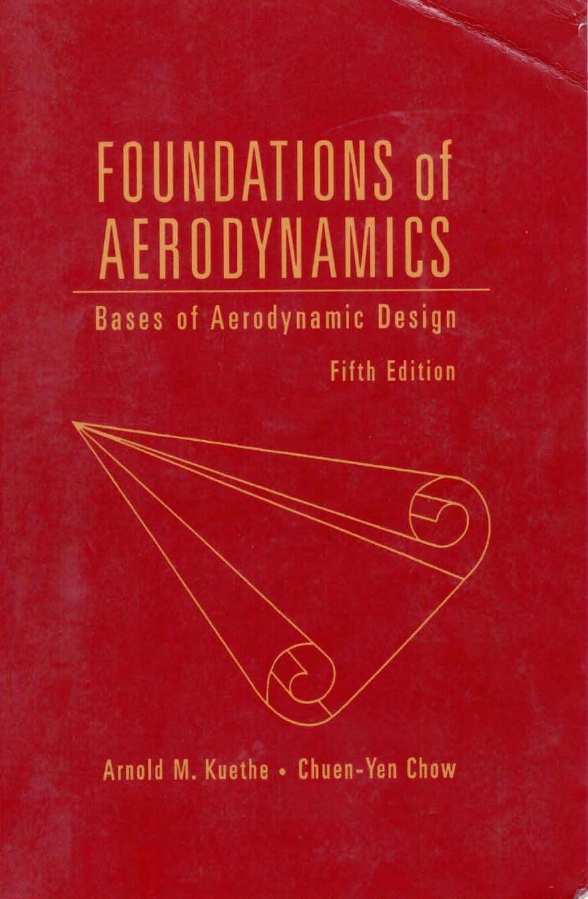
- Arnold M. Kuethe | Chuen-Yen Chow, Foundations of Aerodynamics, Wiley, 5th Edition
Just in case you need another reference I can also recomend this book but I personally preffer the one written by Anderson.
HEAT TRANSFER:
- Yunus A. Cengel, Heat Transfer – A Practical Approach, 2nd Ed.
- John H. Lienhard, A Heat Transfer Textbook, Phlogiston Press, 3rd Ed.
During my Bachelror’s Thesis I had to build computational models of heat transfer cases and during my degree I also had to do a lot of analytical modelling of conduction, convection and radiation mechanisms. If you want to have a first approach to the topic, I would really recomend you to use Heat Transfer – A Practical Approach book. The edition is perfect, the contents are clear and there is no single detail missing.

BOUNDARY LAYERS:
- Hermann Schlichting, Klaus Gersten, Boundary-Layer Theory, Springer, 9th Edition
During my M.Sc in the Stuttgart University I had the access to a lot of literature from Springer and I could also get technical books for 25€. I thought that this book was one that I should have over my shelf because it covers all the topics related to boundary layers, from the basic concepts of fluid mechanics to supersonic effects and compressible flows. Totally recomandable.

- Holger Babinsky, John K. Harvey, Shock-Wave Boundary Layer Interactions, Cambridge.
I have only given a loock to this book but I could recommend it if someone is interested in the related topic. This is the first book devoted solely to a comprehensive state-of-the-art explanation of this phenomenon with coverage of all flow regimes where it occurs. The book includes a description of the basic fluid mechanics of SBLIs plus contributions from leading international experts who share their insight into their physics and the impact they have in practical flow situations.

PROPULSION:
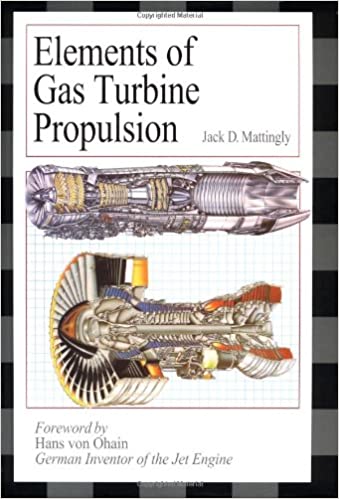
- Jack D. Mattingly, Elements of Gas Turbine Propulsion, Mc Graw Hill.
This book is in fact not directly related to the flued field analisys but it is to the appliation of the main concepts into the study of Gas Turbines. The first time that I heard about this book was during my first year of M.Sc and when I had to use it for my propulsion subjects I became in love with the precision and clearness of its contents. From my point of view, this book should be a reference book for anyone that wants to work or study in a field related to Gas Turbines.
COMPUTATIONAL FLUID DYNAMICS:
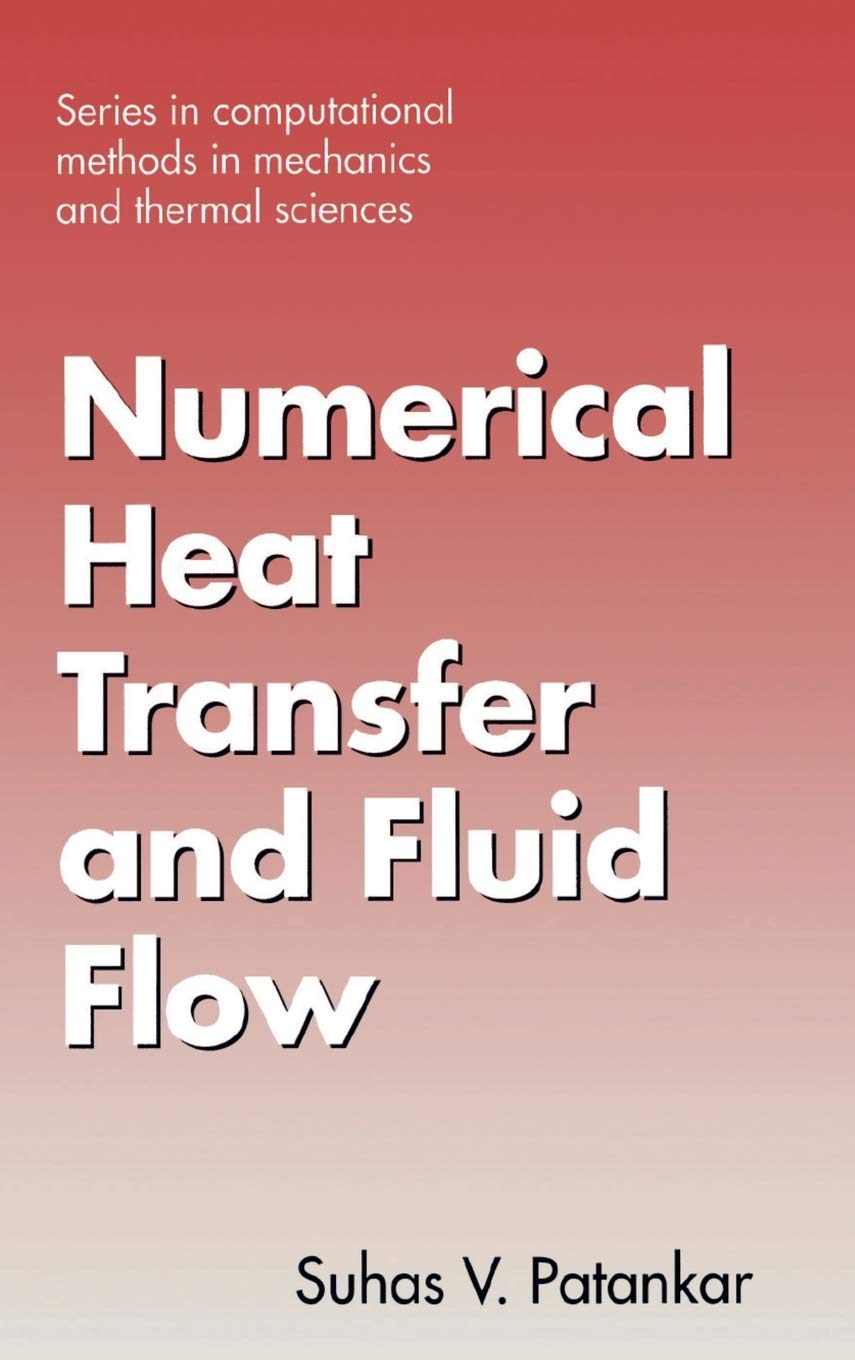
- Suhas V. Patankar, Numerical Heat Transfe and Fluid Flow, Taylor & Francis.
Maybe one of the books that I appreciate most. It was a source of inspiration and ideas for my Bachelor Thesis which was related to the modelling of heat transfer and convection diffusion problems. It is true that sometimes the autor uses special nomenclature but it is really easy to follow the procedures and extract the main principles for modelling fluid and heat mechanisms. I would consider this book as my bible for the CFD introduction.
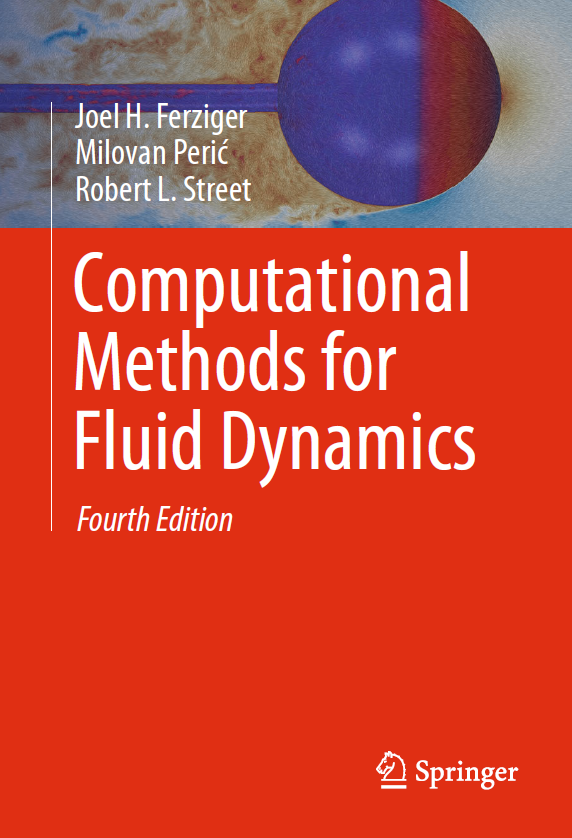
- Joel H. Ferziger , Milovan Perić, Robert L. Street, Computational Methods for Fluid Dynamics, 4th.
This book is also part of my personal library. For me, it was also a reference book for my Bachelor’s Thesis and nowadays I am still sometimes using it for my Master’s Thesis because of the valuable theoretical contents that it has. It covers more topics than the book from Patankar. The finite volume method is favored in this book, although finite difference methods are described in what we hope is sufficient detail. Finite element methods are not covered in detail as a number of books on that subject already exist.
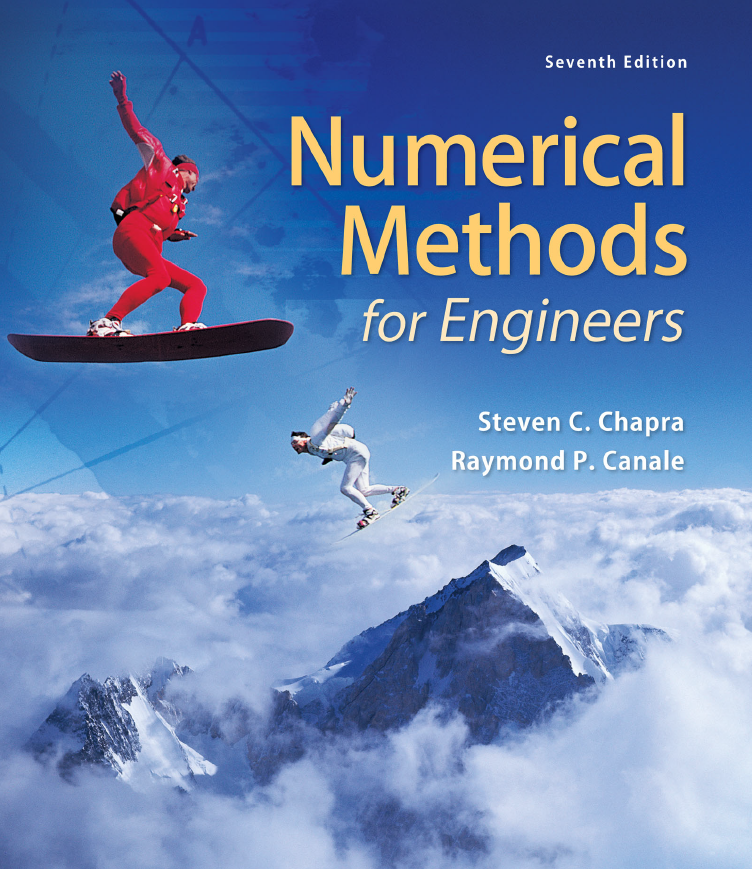
- Steven C. Chapra, Raymond P. Canale, Numerical Methods for Engineers, Mc Graw Hill, 7th.
I have not used this book that much but I would say that it is ideal for introducing yourself to the numerical methodology required for the development of computational fluid dynamics codes.
TURBULENCE MODELLING:
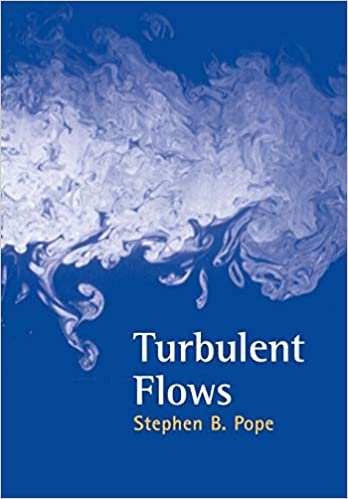
- Stephen B. Pope, Turbulent Flows, Cambridge University Press.
I recently acquired a soft cover copy of this magnificent book. The book cover all aspects from the fundamentals of turbulence to its modelling and simulation. It explains all the required theoretical background to understand how turbulence models should be implemented into the fluid motion equations. The book is writen to be used as a teaching tool into advanced university courses which gives the manuscript even more value for learning purposes.
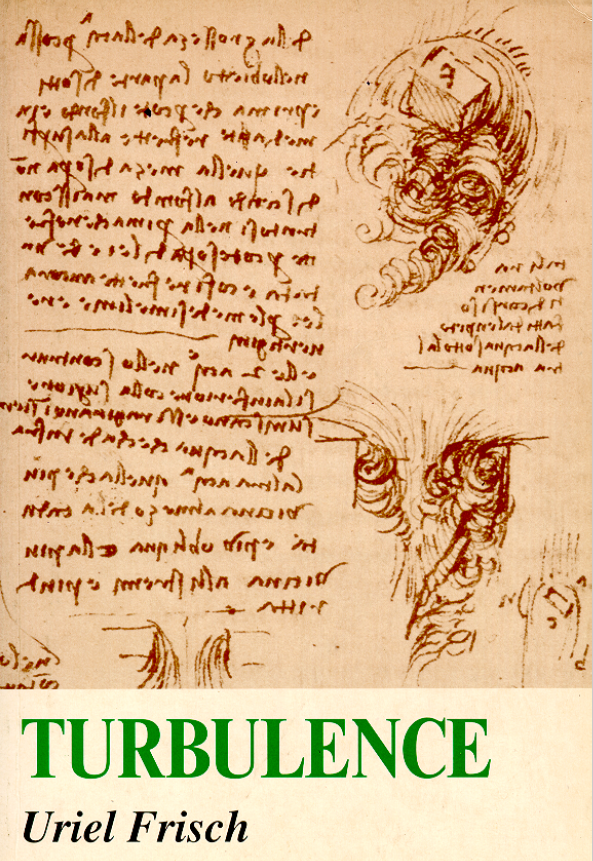
- Uriel Frisch, Turbulence, Cambridge University Press.
This textbook presents a modern account of turbulence, one of the greatest challenges of physics. The state of-the-art is put into a historical prespective fice centuries after the first studies of Leonardo and half a century after the first attempt by A.N Kolmogrov to predict the properties of flow at very high Reynolds numbers. Suh “fully developed turbulence” is ubiquitous in both cosmical and natural enviroments, in engineering aplications and in everyday life.
ACOUSTICS:
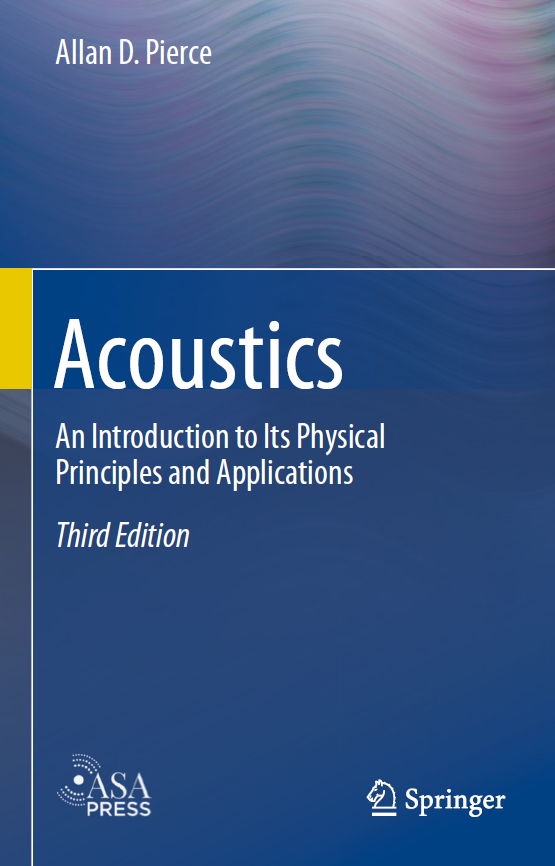
- Allan D. Pierce, Acoustics An Introduction to Its Physical Principles and Applications, Springer, 3rd Ed.
This book introduces the physical principles of acoustics. The predominant objective is to develop those concepts and points of view that have proven most useful
in traditional realms of application such as noise control, underwater acoustics, architectural acoustics, audio engineering, nondestructive testing, remote sensing,
and medical ultrasonics. The book is suitable as a text or as supplementary reading for senior and first-year graduate students in engineering, physics, and mathematics.
- Manfred Kaltenbacher, Computational Acoustics, Springer.
The aim of this book is to present state-of-the-art overview of numerical schemes efficiently solving the acoustic conservation equations, the acoustic wave equation, and its Fourier-transformed Helmholtz equation.

Readers Recommendations:
Many thanks to Julio Mendez and Abimail A. for recommending me other authors and literature. I would leave their contribution here.
AUTHORS.
- Patrick J. Roache
- Charles Hirsch
- Randall Leveque
BOOKS.